Image fusion is the process of combining information of interest in two or more images of a scene into a single highly
informative image. Information of interest depends on the application under consideration.
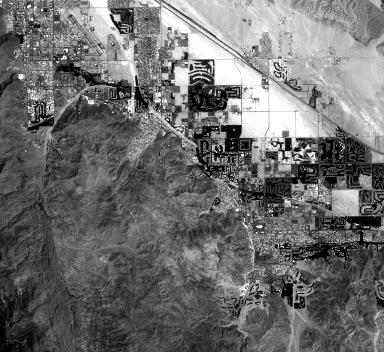
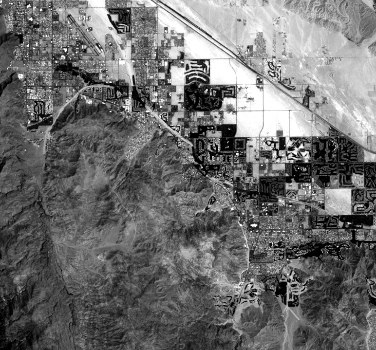
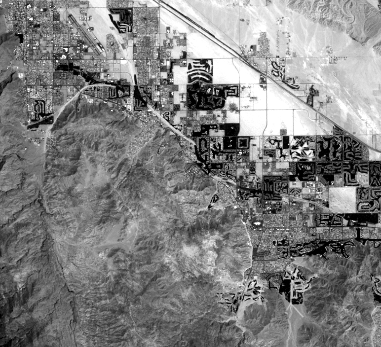
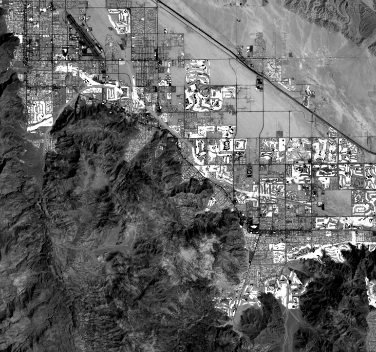
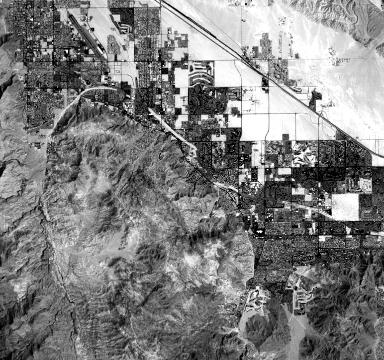
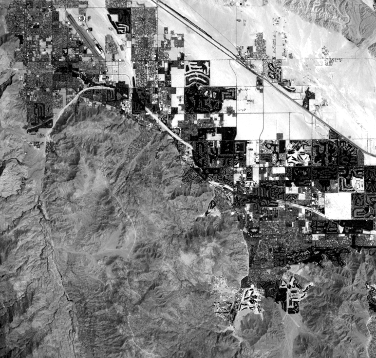
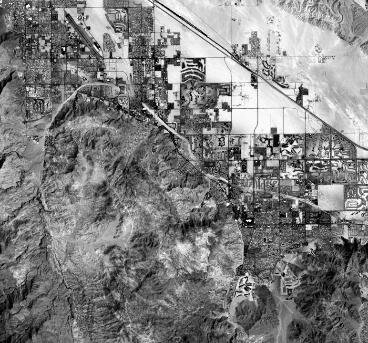
An example of image fusion to maximize information content is given below. Images in Figs. 1a - 1f represent bands 1, 2,
3, 4, 5, and 7 of a Landsat TM image. The image obtained by fusing these bands is depicted in Fig. 1g. To see fusion
examples of registered multi-exposure and multi-focus images, visit the multi-exposure and multi-focus fusion pages.
informative image. Information of interest depends on the application under consideration.
An example of image fusion to maximize information content is given below. Images in Figs. 1a - 1f represent bands 1, 2,
3, 4, 5, and 7 of a Landsat TM image. The image obtained by fusing these bands is depicted in Fig. 1g. To see fusion
examples of registered multi-exposure and multi-focus images, visit the multi-exposure and multi-focus fusion pages.
(a)
(b)
(d)
(c)
(e)
(f)
(g)
Fig. 1. (a)-(f) Bands 1, 2, 3, 4, 5, and 7 of a Landsat TM image. These images are courtesy of NASA. (g) Details in
all images are fused into one image.
all images are fused into one image.
Image fusion techniques assume that the given images are already registered. In many situations, this assumption does
not hold and the images need to be registered before they can be fused. In the following, an example of multi-exposure
image fusion is given where the images are not registered. In this example, first, the images are registered and then, the
registered images are fused. To find out various image registration software available, visit the image registration page.
not hold and the images need to be registered before they can be fused. In the following, an example of multi-exposure
image fusion is given where the images are not registered. In this example, first, the images are registered and then, the
registered images are fused. To find out various image registration software available, visit the image registration page.

(a) (b)

(c) (d)

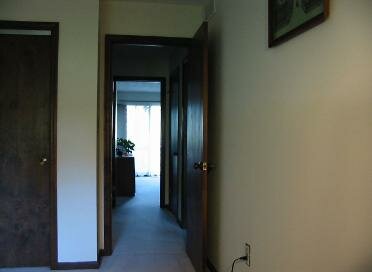
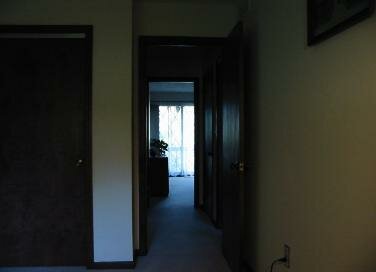
Fig. 2. (a) - (e) Five images obtained by a hand-held camera at five different exposure levels. (f) The fused image.
First, images (b) - (e) are registered to image (a). The registered images are then fused to obtain image (f).
First, images (b) - (e) are registered to image (a). The registered images are then fused to obtain image (f).

|

|
(e) (f)
| Image fusion |
| Image Registration and Fusion Systems |